


Advanced Bharatanatyam Techniques: To Elevate Your Performance

Bharatanatyam is not a dance you ever truly finish learning. At some point in your journey, you realize that knowing the steps is no longer enough. The difference between a trained dancer and a captivating performer lies in how deeply the technique is understood and embodied. Advanced Bharatanatyam techniques are not about doing more, but about doing less with greater intention, clarity, and emotional intelligence. This stage of learning is where discipline meets artistry, and precision meets expression.
Mastering Anga, Pratyanga, and Upanga
In Bharatanatyam, your whole body is always talking. Not just your hands and feet, but your shoulders, neck, eyes, eyebrows, and even your lips. At an advanced level, the goal is to make sure all of these parts move together and make sense as one story.
Anga refers to the big parts of the body, like arms, legs, and torso. Pratyanga includes parts like the neck, shoulders, wrists, and ankles. Upanga is all about small details like eye movement, eyebrow lifts, and facial expressions.
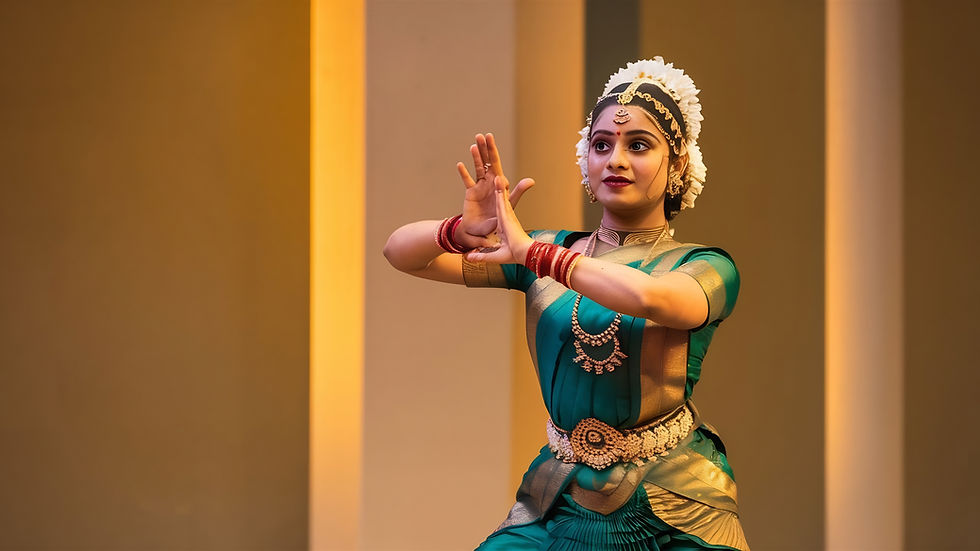
Anga – The Big Body Movements
Anga refers to the major parts of your body. This includes your head, arms, torso, and legs. In simple terms, anga is about how your whole body is placed and moves. Your posture, your stance, how straight or grounded you look, and how clearly your arms and legs move all come under anga. If your body alignment is off, even the best hand gestures or expressions won’t look right.
At an advanced level, strong anga means your body looks stable, balanced, and confident at all times. You are not wobbling, slouching, or rushing through movements. Everything feels controlled and intentional.
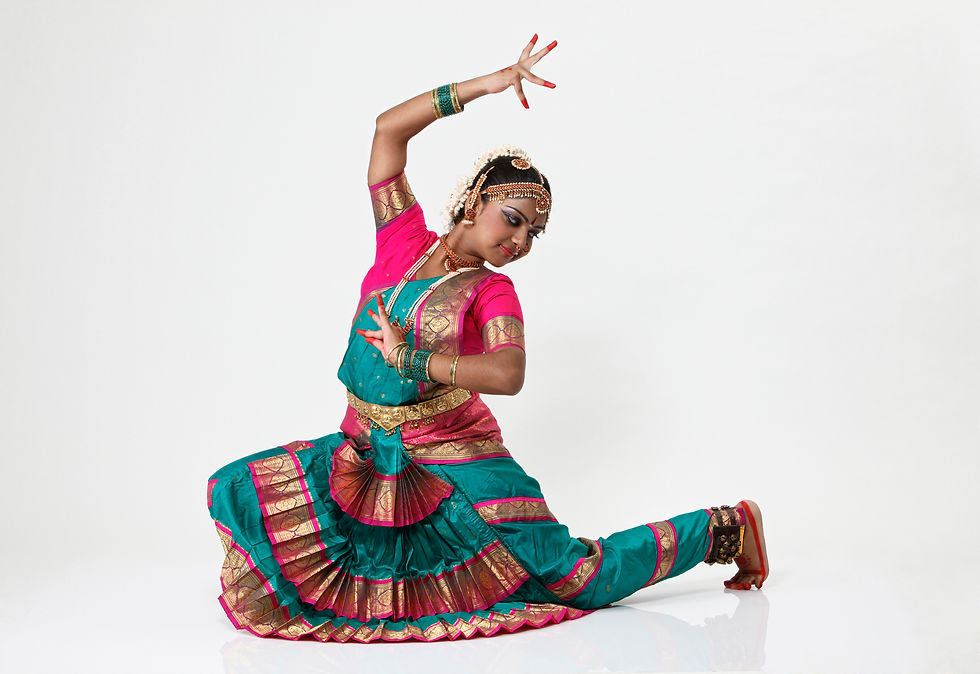
Pratyanga – The Supporting Movements
Pratyanga refers to the smaller body parts that support the main movements. This includes the neck, shoulders, elbows, wrists, knees, and ankles. Think of pratyanga as the connectors. They help smooth out your movements. For example, how your wrist turns at the end of a hand movement, how your neck moves with your eyes, or how your ankle supports your footwork.
When pratyanga is well controlled, movements flow naturally instead of looking stiff or broken. Advanced dancers pay close attention to these parts because they are often where mistakes show up first.
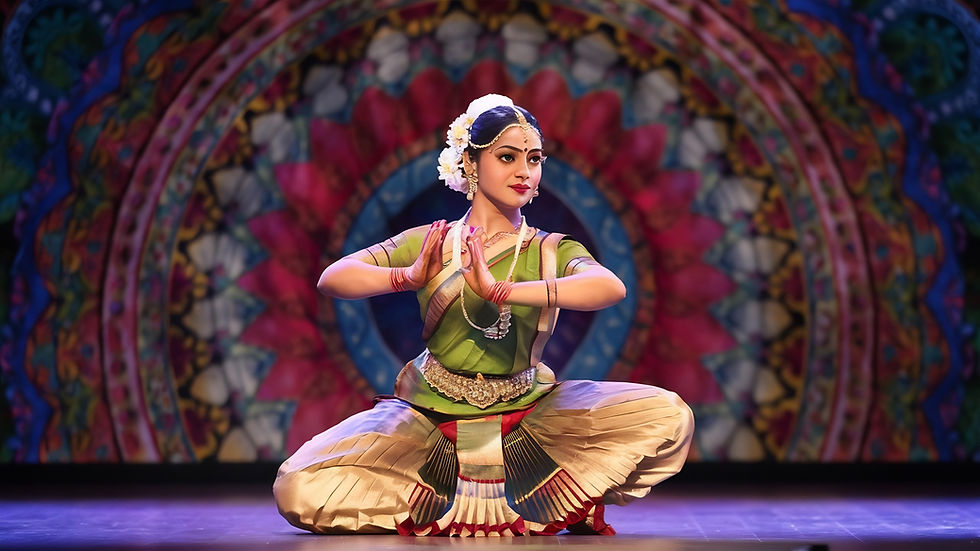
Upanga – The Fine Details and Expressions
Upanga refers to the smallest but most expressive parts of the body. This includes your eyes, eyebrows, eyelids, lips, and facial muscles. Upanga is what brings emotion and storytelling into Bharatanatyam. A slight eye movement, a gentle eyebrow lift, or a soft change in expression can completely change the meaning of a moment.
At an advanced level, upanga is subtle, not exaggerated. The dancer does not force expressions. Instead, emotions appear naturally through controlled facial movements, making the performance feel honest and relatable.
Putting It All Together
When anga, pratyanga, and upanga work together, the dance feels complete. The body looks strong, the movements flow smoothly, and the expressions feel real. In simple words, anga gives strength, pratyanga gives smoothness, and upanga gives life to the performance.
Deepening Adavu Execution for Advanced Performances
Many dancers assume adavus are only for beginners. That assumption often limits growth. At an advanced stage, adavus become tools for stamina, balance, and rhythmic mastery.
The focus shifts to weight distribution, grounded footwork, and consistent araimandi without strain. Practicing adavus slowly is just as important as practicing them fast. This allows the body to internalize strength and alignment. Advanced Bharatanatyam training often revisits basic adavus to uncover hidden inefficiencies and correct long-standing habits.
Advanced Bharatanatyam Techniques
1. Deep Araimandi Mastery
At an advanced level, araimandi is no longer just about bending the knees.
The focus is on:
Holding araimandi for long durations without tension
Keeping the spine upright and relaxed
Moving in and out of araimandi smoothly
Advanced dancers make araimandi look effortless, even during fast sequences.
2. Precision in Adavu Transitions
It’s not the advantage that stands out, it’s how you move between them.
Advanced work focuses on:
Clean endings and beginnings of each movement
Smooth weight shifts
Eliminating extra or unnecessary motion
This creates clarity and polish on stage.
3. Advanced Tala and Laya Control
Understanding rhythm deeply is a major step forward.
This includes:
Dancing confidently in different speeds
Handling complex talas
Maintaining accuracy during pauses and silence
At this stage, dancers don’t follow rhythm blindly. They understand it.
4. Subtle and Mature Abhinaya
Advanced abhinaya is quiet, controlled, and honest.
Key focus areas:
Internalizing emotions before showing them
Using minimal facial movement for maximum impact
Letting eyes and breath lead expressions
This makes storytelling feel natural and relatable.
5. Nuanced Eye and Neck Coordination
Eye and neck movements are trained to work together, not separately.
Advanced dancers practice:
Smooth eye shifts without jerks
Neck movements that support expression
Holding eye focus with confidence
These details elevate the overall presentation.
6. Breath Control and Energy Management
Breath is often ignored, but it’s crucial.
Advanced dancers learn to:
Coordinate breath with movement
Control energy throughout long performances
Recover quickly without showing fatigue
This keeps performances consistent from start to finish.
7. Strong Spatial Awareness
Advanced dancers understand space like a language.
They focus on:
Using stage diagonals effectively
Maintaining balance in group and solo performances
Knowing when to move and when to stay still
Stillness becomes as powerful as movement.
8. Musical Interpretation Beyond Counts
Instead of dancing to counts, advanced dancers dance to meaning.
This involves:
Responding to musical accents
Respecting pauses and silence
Aligning movement quality with emotion
This makes the dance feel alive, not mechanical.
9. Mastery of Lasya and Tandava Balance
The advanced technique lies in switching seamlessly between softness and strength.
Dancers work on:
Graceful transitions between gentle and powerful movements
Matching energy to character and mood
Maintaining control in both styles
This adds range and maturity to performance.
10. Performance Presence and Stillness
Advanced Bharatanatyam performers know how to hold attention without moving.
They practice:
Confident stillness
Clear focus and intent
Commanding the stage naturally
This presence comes from years of disciplined training.
Conclusion
Advanced Bharatanatyam techniques are not about complexity for the sake of difficulty. They are about refinement, awareness, and emotional depth. As the technique matures, the dancer evolves into a storyteller and an artist. Every rehearsal and performance becomes an opportunity to grow. When discipline supports creativity and technique serves emotion, Bharatanatyam transforms into a powerful and living expression of art.


Comments